Client-side executionNo file uploads or sign-up required
Utilovia Hub
Painting & Coatings • 6 min readPrivate & Local

Interior Paint Spread Rates, Primer Coats & Resinous Epoxy Coverage Math

Learn how to calculate net paintable wall and ceiling area, adjust gallon spread rates for porous vs. smooth substrates, and estimate multi-coat epoxy floor kits.

Author: Platform Estimating Editorial Team • Reviewed by: Interior Finishes & Coatings Review Desk • Updated: 2026-11-01 • Methodology
Open Paint Coverage Estimator →

1. Calculating Net Paintable Wall Area vs. Floor Footprint

Interior wall area is driven by room perimeter multiplied by wall height—not floor square footage. A 15 ft × 20 ft room with 9-foot ceilings has a 70-linear-foot perimeter and 630 sq ft of gross wall area, more than double its 300 sq ft floor area.

Deduct standard window and door openings (roughly 20 sq ft per standard door and 15 sq ft per window) to obtain net paintable wall area before multiplying by the number of finish coats.

  • Smooth primed drywall: ~350 to 400 sq ft per gallon per coat
  • Bare drywall or textured stucco: ~250 to 300 sq ft per gallon on the first coat
  • Two-coat finish system: Multiply net area by 2 before dividing by spread rate

2. Resinous Epoxy Kit Coverage & Pot-Life Waste

Two-component (Part A resin + Part B hardener) 100%-solids epoxy coatings are mixed in fixed kit ratios and have a strict working pot life (often 25 to 40 minutes at 75°F).

Because catalyzed epoxy thickens rapidly if left in the bucket, estimators include a 5% to 10% waste allowance and round up to whole pre-proportioned kits.

Technical References & Standards Basis

  • MPI (Master Painters Institute) Architectural Coating Spread Rate Conventions
  • Standard 1604 mil-ft² per US Gallon Volumetric Solids Identity
Support

Frequently Asked Questions: Painting & Coatings

Quick answers about how this works, what it assumes, and where its limits are.

How does Utilovia apply this painting & coatings methodology?

Learn how to calculate net paintable wall and ceiling area, adjust gallon spread rates for porous vs. smooth substrates, and estimate multi-coat epoxy floor kits. You can test inputs interactively with Open Paint Coverage Estimator directly inside your browser without file uploads or sign-up.

What core concepts and calculation steps does this guide cover?

This guide walks through 1. Calculating Net Paintable Wall Area vs. Floor Footprint, 2. Resinous Epoxy Kit Coverage & Pot-Life Waste. Interior wall area is driven by room perimeter multiplied by wall height—not floor square footage. A 15 ft × 20 ft room with 9-foot ceilings has a 70-linear-foot perimeter and 630 sq ft of gross wall area, more than double its 300 sq ft floor area.

When is independent professional verification required?

Always follow manufacturer Safety Data Sheets (SDS) for ventilation, VOC respiratory protection, and two-part epoxy pot-life mixing limits.

Keep going

Related calculators & guides

Interior/Exterior Paint Coverage Estimator — Interior & Concrete preview
Interior & Concrete

Interior/Exterior Paint Coverage Estimator

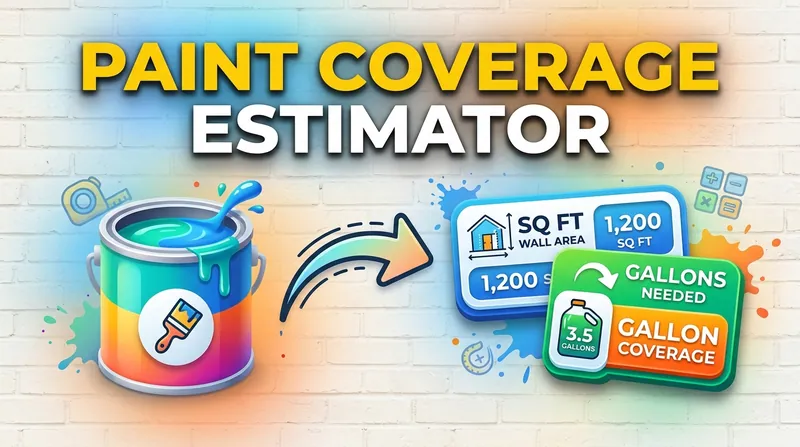
Calculate pure paint material quantity (gallons or liters) from surface dimensions, opening deductions, number of coats, and coverage rate.

Open calculator
Interior Painting Bid Generator — Interior & Concrete preview
Interior & Concrete

Interior Painting Bid Generator

Generate a preliminary interior painting bid including wall/ceiling areas, primer, finish coats, surface prep labor, overhead, and profit.

Open calculator
Epoxy Flooring Cost Estimator — Flooring & Installation preview
Flooring & Installation

Epoxy Flooring Cost Estimator

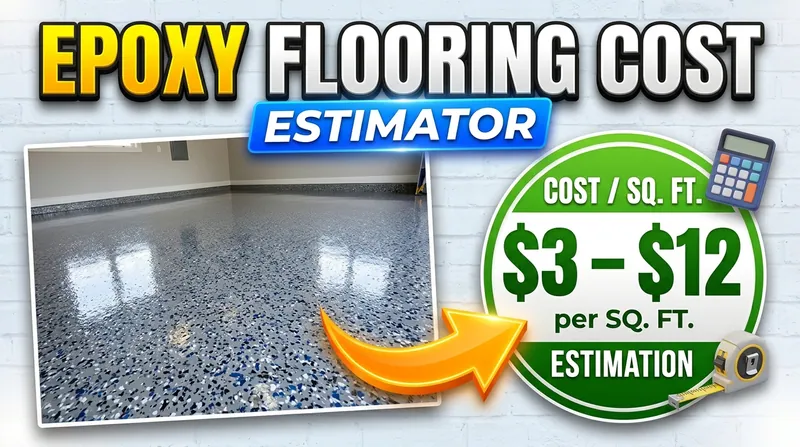
Estimate epoxy floor coating kits/gallons across primer, base, broadcast, and topcoats plus diamond grinding/moisture prep and installation budget.

Open calculator
How to Calculate Concrete Slab & Footing Volume (Cubic Yards & Meters) — Construction Estimating guide cover
Construction Estimating6 min read
Civil & Estimating Review Desk
2026-11-01

How to Calculate Concrete Slab & Footing Volume (Cubic Yards & Meters)

A step-by-step explanation of converting feet and inches into cubic yards (yd³) or cubic meters (m³), applying subgrade waste allowances, and comparing ready-mix against premix bags.

Concrete Slab & Footing CalculatorRead
Roof Pitch Multipliers & Roofing Squares Explained — Roofing & Exterior guide cover
Roofing & Exterior5 min read
Exterior Takeoff Review Desk
2026-11-01

Roof Pitch Multipliers & Roofing Squares Explained

Understand how horizontal building footprint area converts into sloped roof surface area using the Pythagorean pitch factor, and how roofing squares map to bundles and rolls.

Roofing Shingle & Square CalculatorRead
Why Preliminary BTU Rules of Thumb Differ from ACCA Manual J Load Calculations — HVAC & Electrical Concepts guide cover
HVAC & Electrical Concepts6 min read
Mechanical & Electrical Review Desk
2026-11-01

Why Preliminary BTU Rules of Thumb Differ from ACCA Manual J Load Calculations

Explore when a square-footage BTU/tonnage estimate is useful for early budgeting—and why qualified HVAC professionals perform full Manual J, Manual S, and Manual D calculations before selecting equipment.

AC Tonnage & BTU CalculatorRead