Client-side executionNo file uploads or sign-up required
Utilovia Hub
Construction Estimating • 6 min readPrivate & Local

How to Calculate Concrete Slab & Footing Volume (Cubic Yards & Meters)

A step-by-step explanation of converting feet and inches into cubic yards (yd³) or cubic meters (m³), applying subgrade waste allowances, and comparing ready-mix against premix bags.

Author: Platform Estimating Editorial Team • Reviewed by: Civil & Estimating Review Desk • Updated: 2026-11-01 • Methodology
Open Concrete Slab & Footing Calculator →

1. Normalize All Dimensions to the Same Unit Before Multiplying

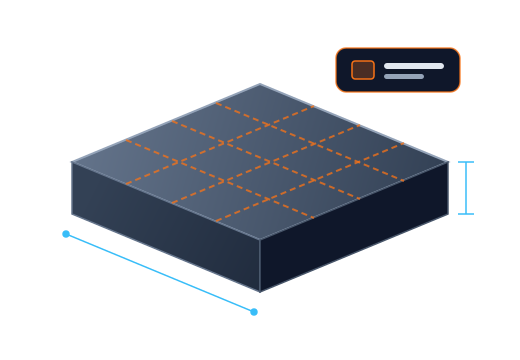
The most common error in concrete estimation is multiplying slab length and width in feet by thickness in inches without converting thickness to feet first. A 4-inch slab is 4 ÷ 12 = 0.3333 feet thick.

Once all three dimensions are in feet, multiply Length × Width × Thickness to obtain cubic feet (ft³), then divide by 27 (since 3 ft × 3 ft × 3 ft = 27 ft³ per cubic yard).

  • 4 inches = 0.3333 ft (divide inches by 12)
  • 6 inches = 0.5000 ft
  • 1 cubic yard (yd³) = 27 cubic feet (ft³) = 0.7646 cubic meters (m³)

2. Why Estimators Add 5% to 10% Waste Allowance

Excavated subgrades and compacted gravel bases naturally vary by half an inch across a large footprint. On a 4-inch slab, an extra 0.4 inches of average depth increases concrete consumption by 10%.

Adding a 5% to 10% waste allowance helps prevent running short on a continuous ready-mix pour, which would otherwise trigger costly short-load delivery fees or cold joints.

Technical References & Standards Basis

  • NIST Special Publication 811 — Guide for the Use of the International System of Units (SI)
  • Standard Ready-Mix Volumetric Conversion (1 yd³ = 27 ft³)
Support

Frequently Asked Questions: Construction Estimating

Quick answers about how this works, what it assumes, and where its limits are.

How does Utilovia apply this construction estimating methodology?

A step-by-step explanation of converting feet and inches into cubic yards (yd³) or cubic meters (m³), applying subgrade waste allowances, and comparing ready-mix against premix bags. You can test inputs interactively with Open Concrete Slab & Footing Calculator directly inside your browser without file uploads or sign-up.

What core concepts and calculation steps does this guide cover?

This guide walks through 1. Normalize All Dimensions to the Same Unit Before Multiplying, 2. Why Estimators Add 5% to 10% Waste Allowance. The most common error in concrete estimation is multiplying slab length and width in feet by thickness in inches without converting thickness to feet first. A 4-inch slab is 4 ÷ 12 = 0.3333 feet thick.

When is independent professional verification required?

Volume arithmetic estimates material quantities only. Slab thickness, reinforcement, frost depth, and soil bearing capacity must be specified by local building codes and a licensed structural engineer.

Keep going

Related calculators & guides

Concrete Slab & Footing Calculator — Interior & Concrete preview
Interior & Concrete

Concrete Slab & Footing Calculator

Calculate concrete volume in cubic yards and cubic meters for slabs and continuous/pier footings, plus waste and premix bag counts.

Open calculator
Unit Converter — Utilities & Conversions preview
Utilities & Conversions

Unit Converter

Convert length, area, volume, weight/mass, and temperature across metric and imperial units.

Open calculator
Epoxy Flooring Cost Estimator — Flooring & Installation preview
Flooring & Installation

Epoxy Flooring Cost Estimator

Estimate epoxy floor coating kits/gallons across primer, base, broadcast, and topcoats plus diamond grinding/moisture prep and installation budget.

Open calculator
Drywall Sheet Counts, Finish Levels (3–5) & Tile/Grout Takeoff Math — Construction Estimating guide cover
Construction Estimating6 min read
Interior Trades & Finishes Review Desk
2026-11-15

Drywall Sheet Counts, Finish Levels (3–5) & Tile/Grout Takeoff Math

Calculate drywall boards (4×8 vs. 4×12 ft), joint compound and tape allowances by finish level, plus tile waste factors, thinset mortar bags, and geometric grout joint volume.

Drywall Installation Bid CalculatorRead
Roof Pitch Multipliers & Roofing Squares Explained — Roofing & Exterior guide cover
Roofing & Exterior5 min read
Exterior Takeoff Review Desk
2026-11-01

Roof Pitch Multipliers & Roofing Squares Explained

Understand how horizontal building footprint area converts into sloped roof surface area using the Pythagorean pitch factor, and how roofing squares map to bundles and rolls.

Roofing Shingle & Square CalculatorRead
Why Preliminary BTU Rules of Thumb Differ from ACCA Manual J Load Calculations — HVAC & Electrical Concepts guide cover
HVAC & Electrical Concepts6 min read
Mechanical & Electrical Review Desk
2026-11-01

Why Preliminary BTU Rules of Thumb Differ from ACCA Manual J Load Calculations

Explore when a square-footage BTU/tonnage estimate is useful for early budgeting—and why qualified HVAC professionals perform full Manual J, Manual S, and Manual D calculations before selecting equipment.

AC Tonnage & BTU CalculatorRead